Hiring an experienced wedding DJ Seattle couples recommend is less about what the job involves and more about what happens when the job gets hard. The role itself is the same at every level. What changes is the margin for error. If you are still working out what the role covers, our guide on what a wedding DJ actually does lays out the full scope.
This post covers something narrower. Not what a DJ does, but what separates someone who has worked 30 weddings from someone who has worked 500.
The Gap Only Shows Up When Something Goes Wrong
On a wedding where everything runs to plan, the difference between an experienced wedding DJ Seattle couples book and a newer one is close to invisible. Both play music. Both make the announcements. The room has a good time.
Weddings that run entirely to plan are rare. The caterer runs behind. The photographer needs ten more minutes. A speaker cuts out during a toast. Experience is not a general quality. It is a library of specific situations someone has already been in once.
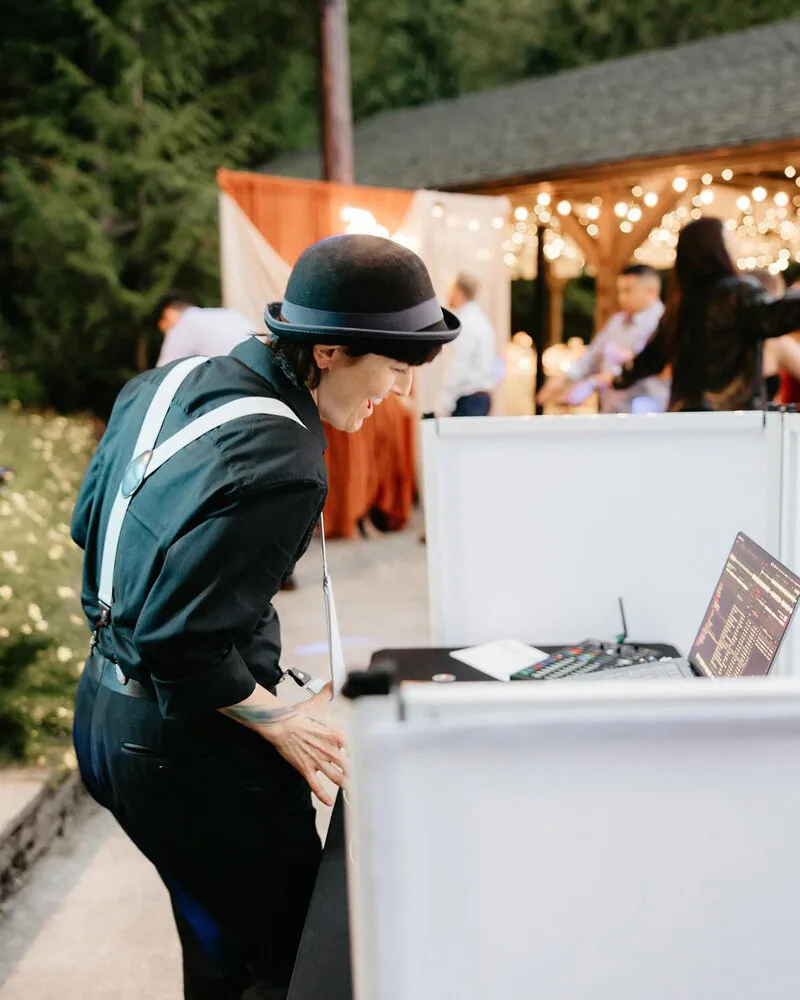
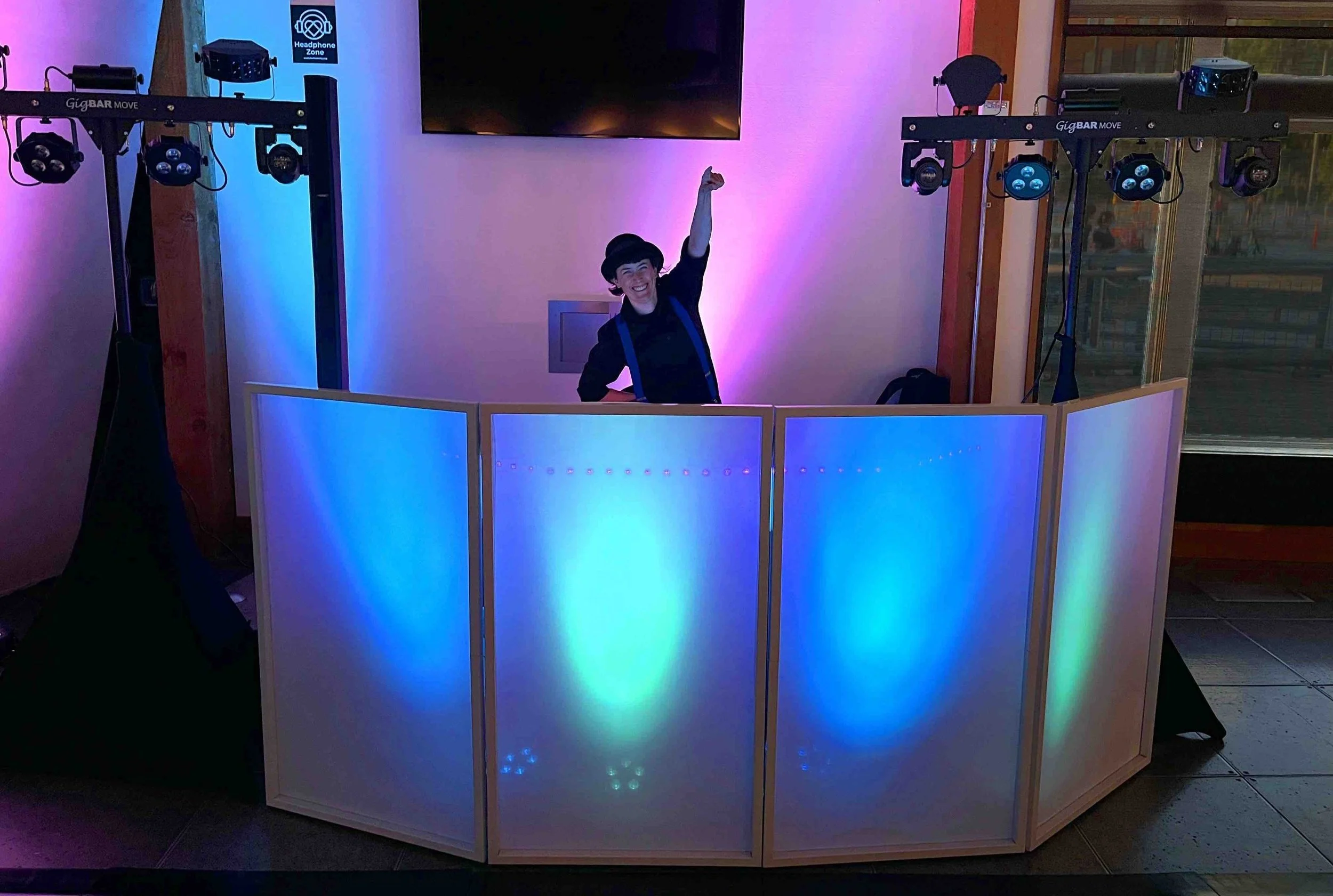
DJ Kelli, who has worked over 500 events since 2007, describes it as pattern recognition. The situation is rarely new. The response is already known, so it happens without visible deliberation. That is the whole difference, and it only becomes valuable on the night something slips.
What an Inexperienced DJ Does Not See Coming
The failures are rarely dramatic. They are small, and they compound.
A newer DJ waits to be told the timeline has shifted. An experienced one notices the buffet line is moving slowly and adjusts before anyone announces a delay. That gap is maybe fifteen minutes, which sounds minor. But it lands squarely on the transition into speeches, which is where a room is hardest to hold.
A newer DJ fills silence with microphone talk. Silence during a transition feels like a problem when you have not seen many of them. Experienced DJs know most gaps close on their own, and that talking into them slows the evening down rather than moving it forward.
A newer DJ opens the dance floor on schedule rather than on readiness. The timeline says 8:45, so the music starts at 8:45, and twelve people stand around. Experience is knowing that the room was not ready, and that waiting four minutes would have changed the night. For more on delays specifically, see what happens when your wedding timeline runs behind.
Redundancy Is Bought With Experience
Experienced DJs carry backup equipment because they have needed it. A spare speaker, a second controller, extra cables for ceremony audio. Newer DJs often carry none, and not out of carelessness. They have simply never had a failure yet.
Outdoor ceremonies in the Pacific Northwest are where this shows up most. Wind, battery power, and long cable runs create variables that indoor venues do not. An experienced wedding DJ Seattle couples hire for a coastal or mountain venue has already lost a wireless microphone to interference once, and packs accordingly.
The tell is specificity. Ask when they last used their backup gear. A real answer describes an event. A weak one describes an intention. The American Disc Jockey Association also advises asking for proof of liability insurance, which most established venues now require anyway.
Vendor Trust Is Earned Over Years, Not Events
Coordinators and photographers in the Seattle market work with the same DJs repeatedly. That familiarity changes how a wedding runs. A coordinator who has worked with your DJ before does not need to explain anything. They make eye contact across the room and the adjustment happens.
A DJ new to the market has none of that. Every coordination has to be negotiated in the moment, often in front of guests. It works, but it costs time, and the couple sometimes ends up being the relay point between vendors.
Preferred vendor lists are a reasonable proxy here. So is asking who they have worked with recently at your venue.
At Puget Sounds, DJ Kelli checks timeline changes with the photographer, caterer, venue manager, and planner or coordinator so everyone is working from the same version of the plan. That coordination matters most when dinner runs late, formalities move, or the couple approves additional time.
How to Tell Before You Book
Years in business is a weak signal on its own. Someone doing eight weddings a year for a decade has less pattern recognition than someone doing sixty a year for three.
Better to ask scenario questions and listen for specificity. What happens when dinner runs 40 minutes late. What they did the last time a microphone failed mid-toast. How they handle a guest who grabs the mic uninvited. An experienced DJ reaches for a memory. A newer one describes an ideal outcome. Both sound confident, so the detail is the tell. The full list of questions to ask your wedding DJ covers this ground, and our consultation tips for Seattle couples cover how to read the answers.
None of this means a newer DJ cannot run a great wedding. Plenty do. It means you are accepting a wider range of outcomes, and that is a reasonable tradeoff to make knowingly rather than by accident. If budget is driving the decision, The Knot’s wedding budget guidance is a useful place to work out where entertainment sits against your other priorities.
If you are comparing price bands as well as experience, review what Seattle wedding DJ costs and packages typically include.
Frequently Asked Questions
Does DJ experience actually matter for a wedding?
It matters most when something goes wrong. On a wedding that runs to plan, the difference is small. Since most weddings deviate from the plan somewhere, experience is effectively insurance against the parts you cannot predict.
Learn more about working with an experienced Seattle wedding DJ for your celebration.
How many weddings should a DJ have worked?
Volume matters more than years. A DJ working sixty weddings a year builds pattern recognition faster than one working eight. Ask how many weddings they work annually, not how long they have been in business.
Is it a mistake to hire a newer wedding DJ?
Not necessarily. Many newer DJs run excellent weddings and charge less. You are accepting a wider range of possible outcomes, which is fine as long as it is a decision rather than an oversight.
What question best reveals a DJ’s real experience?
Ask what happened the last time something went wrong at a wedding. Experienced DJs describe a specific event and what they did. Less experienced ones describe what they would ideally do.
Hiring an experienced wedding DJ Seattle couples recommend is less about what the job involves and more about what happens when the job gets hard. The role itself is the same at every level. What changes is the margin for error. If you are still working out what the role covers, our guide on what a wedding DJ actually does lays out the full scope.
This post covers something narrower. Not what a DJ does, but what separates someone who has worked 30 weddings from someone who has worked 500.
The Gap Only Shows Up When Something Goes Wrong
On a wedding where everything runs to plan, the difference between an experienced wedding DJ Seattle couples book and a newer one is close to invisible. Both play music. Both make the announcements. The room has a good time.
Weddings that run entirely to plan are rare. The caterer runs behind. The photographer needs ten more minutes. A speaker cuts out during a toast. Experience is not a general quality. It is a library of specific situations someone has already been in once.
DJ Kelli, who has worked over 500 events since 2007, describes it as pattern recognition. The situation is rarely new. The response is already known, so it happens without visible deliberation. That is the whole difference, and it only becomes valuable on the night something slips.
What an Inexperienced DJ Does Not See Coming
The failures are rarely dramatic. They are small, and they compound.
A newer DJ waits to be told the timeline has shifted. An experienced one notices the buffet line is moving slowly and adjusts before anyone announces a delay. That gap is maybe fifteen minutes, which sounds minor. But it lands squarely on the transition into speeches, which is where a room is hardest to hold.
A newer DJ fills silence with microphone talk. Silence during a transition feels like a problem when you have not seen many of them. Experienced DJs know most gaps close on their own, and that talking into them slows the evening down rather than moving it forward.
A newer DJ opens the dance floor on schedule rather than on readiness. The timeline says 8:45, so the music starts at 8:45, and twelve people stand around. Experience is knowing that the room was not ready, and that waiting four minutes would have changed the night. For more on delays specifically, see what happens when your wedding timeline runs behind.
Redundancy Is Bought With Experience
Experienced DJs carry backup equipment because they have needed it. A spare speaker, a second controller, extra cables for ceremony audio. Newer DJs often carry none, and not out of carelessness. They have simply never had a failure yet.
Outdoor ceremonies in the Pacific Northwest are where this shows up most. Wind, battery power, and long cable runs create variables that indoor venues do not. An experienced wedding DJ Seattle couples hire for a coastal or mountain venue has already lost a wireless microphone to interference once, and packs accordingly.
The tell is specificity. Ask when they last used their backup gear. A real answer describes an event. A weak one describes an intention. The American Disc Jockey Association also advises asking for proof of liability insurance, which most established venues now require anyway.
Vendor Trust Is Earned Over Years, Not Events
Coordinators and photographers in the Seattle market work with the same DJs repeatedly. That familiarity changes how a wedding runs. A coordinator who has worked with your DJ before does not need to explain anything. They make eye contact across the room and the adjustment happens.
A DJ new to the market has none of that. Every coordination has to be negotiated in the moment, often in front of guests. It works, but it costs time, and the couple sometimes ends up being the relay point between vendors.
Preferred vendor lists are a reasonable proxy here. So is asking who they have worked with recently at your venue.
At Puget Sounds, DJ Kelli checks timeline changes with the photographer, caterer, venue manager, and planner or coordinator so everyone is working from the same version of the plan. That coordination matters most when dinner runs late, formalities move, or the couple approves additional time.
How to Tell Before You Book
Years in business is a weak signal on its own. Someone doing eight weddings a year for a decade has less pattern recognition than someone doing sixty a year for three.
Better to ask scenario questions and listen for specificity. What happens when dinner runs 40 minutes late. What they did the last time a microphone failed mid-toast. How they handle a guest who grabs the mic uninvited. An experienced DJ reaches for a memory. A newer one describes an ideal outcome. Both sound confident, so the detail is the tell. The full list of questions to ask your wedding DJ covers this ground, and our consultation tips for Seattle couples cover how to read the answers.
None of this means a newer DJ cannot run a great wedding. Plenty do. It means you are accepting a wider range of outcomes, and that is a reasonable tradeoff to make knowingly rather than by accident. If budget is driving the decision, The Knot’s wedding budget guidance is a useful place to work out where entertainment sits against your other priorities.
If you are comparing price bands as well as experience, review what Seattle wedding DJ costs and packages typically include.
Frequently Asked Questions
Does DJ experience actually matter for a wedding?
It matters most when something goes wrong. On a wedding that runs to plan, the difference is small. Since most weddings deviate from the plan somewhere, experience is effectively insurance against the parts you cannot predict.
Learn more about working with an experienced Seattle wedding DJ for your celebration.
How many weddings should a DJ have worked?
Volume matters more than years. A DJ working sixty weddings a year builds pattern recognition faster than one working eight. Ask how many weddings they work annually, not how long they have been in business.
Is it a mistake to hire a newer wedding DJ?
Not necessarily. Many newer DJs run excellent weddings and charge less. You are accepting a wider range of possible outcomes, which is fine as long as it is a decision rather than an oversight.
What question best reveals a DJ’s real experience?
Ask what happened the last time something went wrong at a wedding. Experienced DJs describe a specific event and what they did. Less experienced ones describe what they would ideally do.