Most Seattle wedding dance floor tips start with song lists, which is the least useful place to begin. Songs matter, obviously. But floors usually stall for reasons that have nothing to do with the playlist. Timing, transitions, and trust do more of the work than any single track does.
How a Wedding Dance Floor Builds Across the Night
Open dancing has a shape, and that shape stays fairly consistent. Most Seattle wedding dance floor tips skip past it and go straight to music. The first thirty minutes carry the most weight.
Photographers are often booked for only thirty to sixty minutes of dance coverage. So a full floor early matters. Guests also have limited energy left by that point. Many have roughly twenty minutes in them before they start thinking about the drive home.
So the strongest crowd pleasers belong early rather than saved for later. After that first push, softer hits work while the room resets. Then the music shifts newer for the younger guests, who are usually the ones staying until the end. Around that point the crowd catches a second wind. DJ Kelli holds several big songs back for exactly that reason.
Seattle Wedding Dance Floor Tips Start With the First Song
The opening song of general dancing does more than it appears to. DJ Kelli describes it as roughly ten seconds. That is the window to convince the room that the night includes music they want.
That song has to work across generations. Older guests generally do not follow current pop, and younger guests will not dance to just any older track. Opening with something current usually backfires. The older crowd reads it as a signal that the night is not for them. They become harder to pull back later, even once their decade eventually plays.
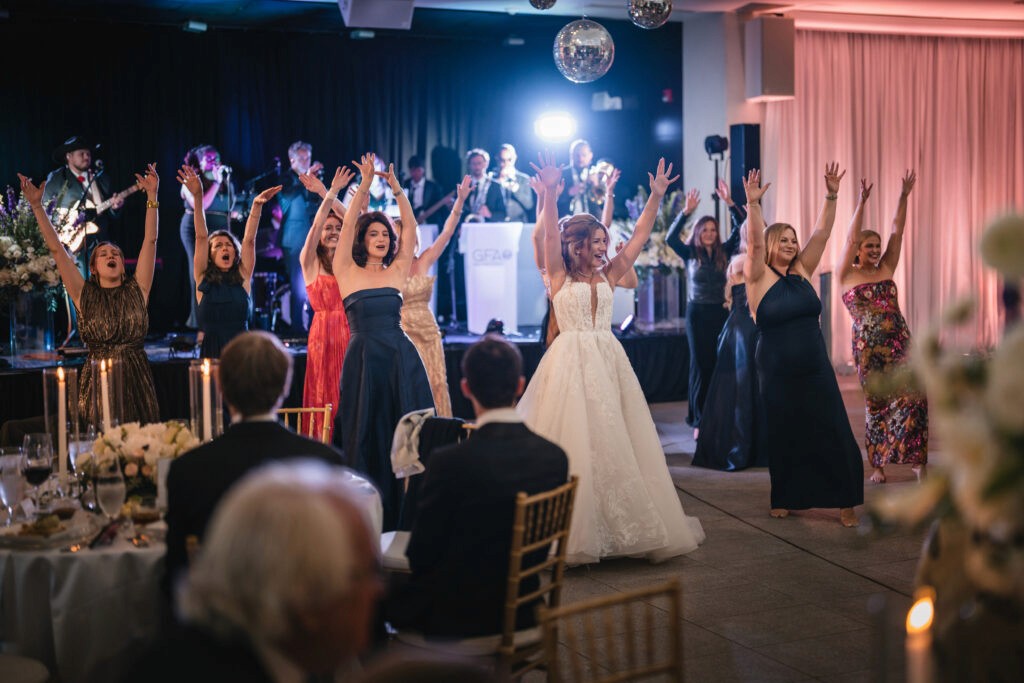
The other lever is simpler and stronger than any song choice. Getting at least one of the couple onto the floor moves more guests than anything else available.
What Actually Stalls a Wedding Dance Floor
Couples tend to assume a good floor follows automatically from good songs. Most Seattle wedding dance floor tips quietly reinforce that idea. In practice, stalls come from pacing and sequencing far more often than from song quality.
Genre fatigue is the common one. Two or three hours inside a single genre gets boring, no matter how well chosen the songs are. Switching genres and decades every song or two keeps the tension from settling. It also keeps different age groups on the floor at the same time.
Without that rotation, the pattern is predictable. Parents and grandparents open the floor. The younger guests wait for something that appeals to them. If it takes too long, they leave. Music preferences form early and tend to stick. That is why a room spanning forty years needs rotation rather than a single lane.
Intermittent Dancing Drains More Energy Than It Builds
A common request is scattered dancing through the earlier parts of the evening, filling the gaps. In practice, that pattern works against the room.
Three things happen. Guests who came to talk get displaced, because dance volume makes conversation genuinely difficult. Guests who do dance get worn down before open dancing even starts. And when formalities are spread out, some people leave before cake cutting or the special dances.
Destination weekends behave a little differently. At venues around Leavenworth, Cle Elum, and the San Juan Islands, guests have often spent two days together already. Those floors open faster. However, they also tire earlier. The shape stays the same, but the clock moves up.
Running the formalities in tighter succession and then opening the floor tends to hold more of the room. The energy has somewhere to go instead of leaking out in pieces.
Reading a Room Is Mostly Watching Where People Go
There is a difference between a lull and a stall. It is visible once you know what to look for.
During a lull, guests sit and talk but stay nearby. They can still hear the music, so they come back. During a stall, they head for the bar, drift somewhere they cannot hear anything, or start collecting jackets. That last one is the real warning.
Dead songs announce themselves the same way. The floor clears, people turn toward each other, and conversation replaces movement. Seattle wedding dance floor tips rarely mention the recovery, but it is simple enough. Crossfade out early rather than riding the song to its end. Sometimes saying so out loud helps, since guests relax once they know the DJ noticed.
Rebuilding a Wedding Dance Floor After a Stall
Most stalls trace back to a transition rather than a song. An announcement lands awkwardly, a formality interrupts the momentum, and nothing brings the room back cleanly afterward.
Recovery works the way the opening did. A familiar multigenerational song. At least one of the couple visible on the floor. Then a short runway before anything new gets introduced. Rebuilding always takes longer than the original build.
That is the honest version of most Seattle wedding dance floor tips. The floor reflects how the previous hour was handled, not only what is playing right now.
FAQs About Dance Floor Energy
Will a great playlist guarantee a full floor?
No. Sequencing and timing carry more weight than song quality. A strong list played in the wrong order still empties a room.
Should we schedule dancing between dinner courses and speeches?
Usually not. Intermittent dancing tires the dancers and displaces the guests who came to talk.
What actually gets people out first?
One of you on the floor. Nothing in a playlist competes with that.
Why does the floor empty right after a formality?
The formality broke the momentum and nothing rebuilt it cleanly. Recovery takes longer than the original build, so the transition matters more than the next song.
Most Seattle wedding dance floor tips start with song lists, which is the least useful place to begin. Songs matter, obviously. But floors usually stall for reasons that have nothing to do with the playlist. Timing, transitions, and trust do more of the work than any single track does.
How a Wedding Dance Floor Builds Across the Night
Open dancing has a shape, and that shape stays fairly consistent. Most Seattle wedding dance floor tips skip past it and go straight to music. The first thirty minutes carry the most weight.
Photographers are often booked for only thirty to sixty minutes of dance coverage. So a full floor early matters. Guests also have limited energy left by that point. Many have roughly twenty minutes in them before they start thinking about the drive home.
So the strongest crowd pleasers belong early rather than saved for later. After that first push, softer hits work while the room resets. Then the music shifts newer for the younger guests, who are usually the ones staying until the end. Around that point the crowd catches a second wind. DJ Kelli holds several big songs back for exactly that reason.
Seattle Wedding Dance Floor Tips Start With the First Song
The opening song of general dancing does more than it appears to. DJ Kelli describes it as roughly ten seconds. That is the window to convince the room that the night includes music they want.
That song has to work across generations. Older guests generally do not follow current pop, and younger guests will not dance to just any older track. Opening with something current usually backfires. The older crowd reads it as a signal that the night is not for them. They become harder to pull back later, even once their decade eventually plays.
The other lever is simpler and stronger than any song choice. Getting at least one of the couple onto the floor moves more guests than anything else available.
What Actually Stalls a Wedding Dance Floor
Couples tend to assume a good floor follows automatically from good songs. Most Seattle wedding dance floor tips quietly reinforce that idea. In practice, stalls come from pacing and sequencing far more often than from song quality.
Genre fatigue is the common one. Two or three hours inside a single genre gets boring, no matter how well chosen the songs are. Switching genres and decades every song or two keeps the tension from settling. It also keeps different age groups on the floor at the same time.
Without that rotation, the pattern is predictable. Parents and grandparents open the floor. The younger guests wait for something that appeals to them. If it takes too long, they leave. Music preferences form early and tend to stick. That is why a room spanning forty years needs rotation rather than a single lane.
Intermittent Dancing Drains More Energy Than It Builds
A common request is scattered dancing through the earlier parts of the evening, filling the gaps. In practice, that pattern works against the room.
Three things happen. Guests who came to talk get displaced, because dance volume makes conversation genuinely difficult. Guests who do dance get worn down before open dancing even starts. And when formalities are spread out, some people leave before cake cutting or the special dances.
Destination weekends behave a little differently. At venues around Leavenworth, Cle Elum, and the San Juan Islands, guests have often spent two days together already. Those floors open faster. However, they also tire earlier. The shape stays the same, but the clock moves up.
Running the formalities in tighter succession and then opening the floor tends to hold more of the room. The energy has somewhere to go instead of leaking out in pieces.
Reading a Room Is Mostly Watching Where People Go
There is a difference between a lull and a stall. It is visible once you know what to look for.
During a lull, guests sit and talk but stay nearby. They can still hear the music, so they come back. During a stall, they head for the bar, drift somewhere they cannot hear anything, or start collecting jackets. That last one is the real warning.
Dead songs announce themselves the same way. The floor clears, people turn toward each other, and conversation replaces movement. Seattle wedding dance floor tips rarely mention the recovery, but it is simple enough. Crossfade out early rather than riding the song to its end. Sometimes saying so out loud helps, since guests relax once they know the DJ noticed.
Rebuilding a Wedding Dance Floor After a Stall
Most stalls trace back to a transition rather than a song. An announcement lands awkwardly, a formality interrupts the momentum, and nothing brings the room back cleanly afterward.
Recovery works the way the opening did. A familiar multigenerational song. At least one of the couple visible on the floor. Then a short runway before anything new gets introduced. Rebuilding always takes longer than the original build.
That is the honest version of most Seattle wedding dance floor tips. The floor reflects how the previous hour was handled, not only what is playing right now.
FAQs About Dance Floor Energy
Will a great playlist guarantee a full floor?
No. Sequencing and timing carry more weight than song quality. A strong list played in the wrong order still empties a room.
Should we schedule dancing between dinner courses and speeches?
Usually not. Intermittent dancing tires the dancers and displaces the guests who came to talk.
What actually gets people out first?
One of you on the floor. Nothing in a playlist competes with that.
Why does the floor empty right after a formality?
The formality broke the momentum and nothing rebuilt it cleanly. Recovery takes longer than the original build, so the transition matters more than the next song.